From @ai_med_line
What I build and test, I share there first. Systems, demos, and what didn't work.



Implementation over inspiration. I build the foundation, the agents and the plugin together with your people, in your setup. Something is finished when we are done, and you can keep building yourselves. It creates value and gives time back to the core work.
Request a tailored setupIndividual sessions with key people or whole teams, arranged around where you are. Three things recur, in the order that suits you.
Your business, tone and rules written down, so everything builds on the same base. Team or Enterprise access, skills per department and a compliance layer. Plus the text for your IT department, so the setup can be approved.
Individual sessions with the key people who need it set up, or with whole teams. Live demos and hands-on work in your own setup. Nobody starts from a blank screen.
Workflows and agents built together with your people and rolled out as plugins for the whole company, which your owner can set as the default for everyone on Team and Enterprise. You keep the authority for as long as you want, and it can become as self-running as you like. Ongoing sparring as you keep building.
Every agent gets a job description, standards and limits, and an approval step until you trust it. It is not a one-off setup. The system is maintained, reviewed and improved over time, like anyone else on the team. It is scaling, not zero oversight. That is why I build together with your own people: they need to be able to read the job description, change it and set up the next one.
The term first, the value right after. Everything runs as drafts for approval, until you move the gate yourselves.
Data from Meta and Google via Windsor.ai. A weekly report without jargon, budget suggestions, ad copy and creative briefs, and campaigns created in both Google and Meta following best practice.
You get: recommendations you approve with a yes. It never touches budgets on its own.
Pipedrive and Apollo connected. Leads are scored against your ideal customer profile: hot, warm, cold. Cold emails and follow-ups are written as drafts in your tone, and the pipeline is kept up to date.
You get: salespeople who talk to customers instead of sorting.
The week's brief, hooks, captions, LinkedIn version and the long version for the newsletter. Research via Apify and Firecrawl, publishing via Blotato. Video editor and carousel maker in the same setup.
You get: drafts for the week's content every Sunday, in your tone, ready for approval.
Agents with custom MCPs for your accounting system. Invoices, bookkeeping, a VAT overview and "who owes us money" as questions in plain language.
You get: the overview in seconds. Nothing is booked without a yes.
Wispr Flow or Granola transcribes, a connector sends it to Claude. Every meeting becomes searchable.
You get: minutes, proposals and follow-ups in your templates in seconds.
Reads the threads and writes drafts in your tone, trained on your sent mail. Connected to Slack, Trello or similar and to your client projects, so the answers are qualified.
You get: drafts ready to send. Nothing goes out without approval.
Monitors competitors and inspiration accounts, and finds what is working right now in your market.
You get: the week's content with a reason grounded in the market.
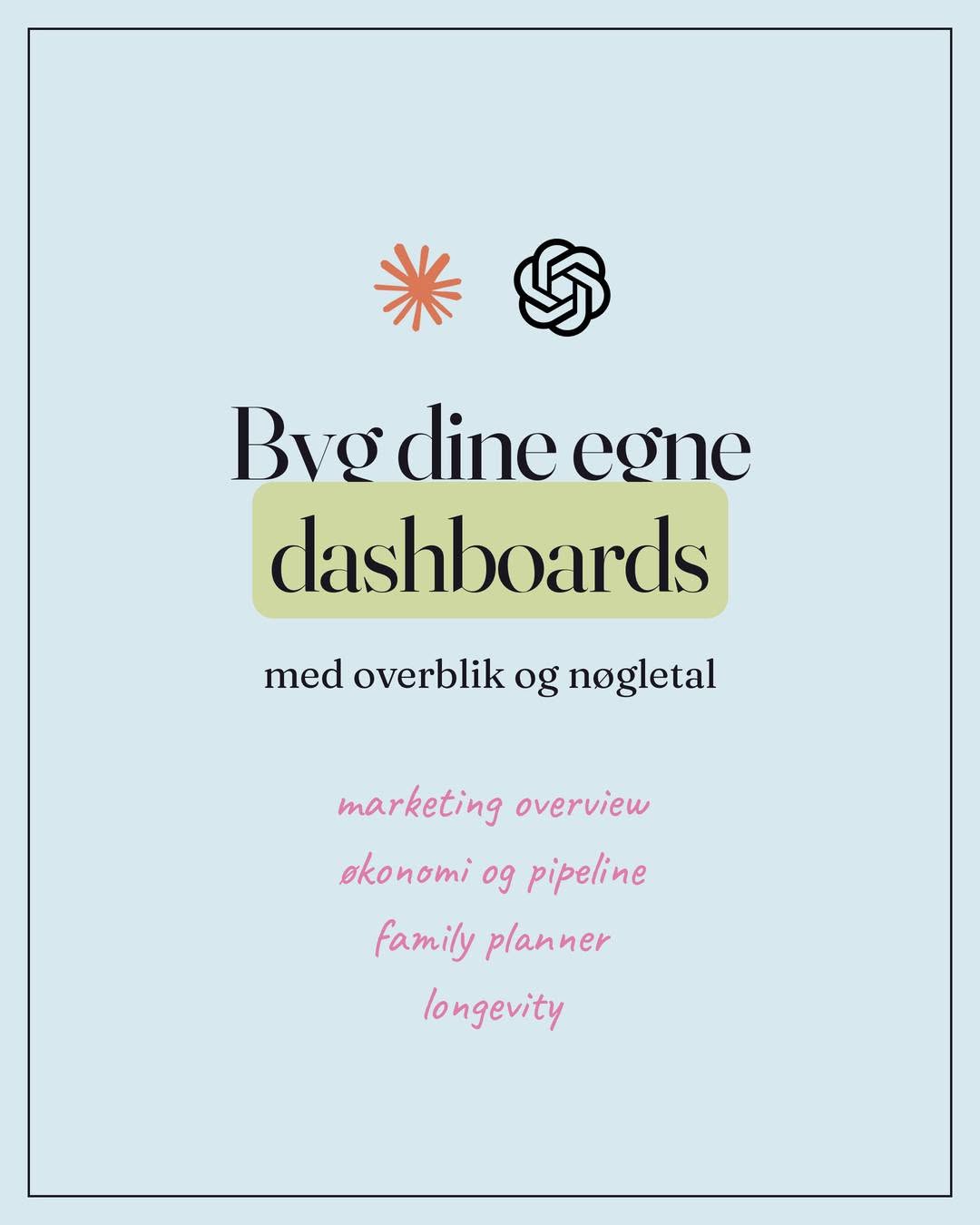
Key people's own dashboards. One HTML file with the few numbers each of them steers by, and the next step. Built in a conversation, without code.
You get: the overview on one screen, per role.
The week's brief on Monday morning, daily lead scoring, the monthly report. Runs on its own.
You get: the work done before the day starts. You approve.
All agents and skills packaged for the whole company. Your owner sets the package as the default for everyone, so nobody starts from scratch, and new colleagues are up and running on day one.
You get: one system everyone works in.
Rules and documentation under the EU AI Act: what your agents may and may not do, who has oversight, what is logged, and how users are informed when they meet AI. Plus the AI literacy measures for staff that the regulation asks for. You can write your own compliance files and keep them ready for regulators and clients, or use software like Vanta that keeps track of it on an ongoing basis.
You get: a setup your IT and legal teams can approve, and that holds when the high-risk requirements take effect from December 2027.
Tools I build with at companies
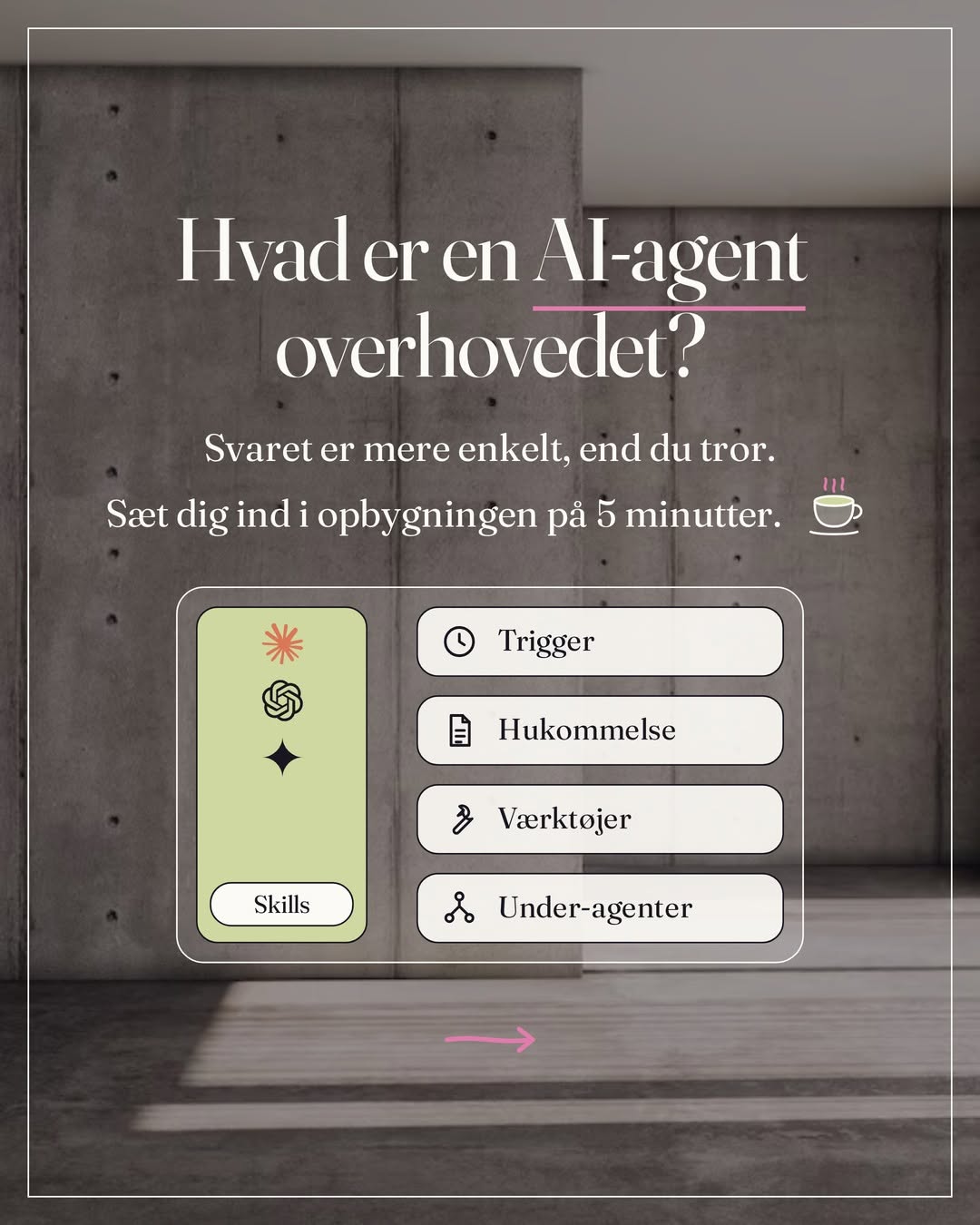
Four things separate a system from a pile of tasks. Based on them, I tailor a setup for you, at the pace and scope that fits.
Brand, language, rules and agent files in a folder you own, with your own history. The model executes. If you change model or tool, the system still stands.
A headquarters keeps brand, language and rules in one place. The departments read from it and write back. No copies, no "which version was the right one". With an approval step until you trust them.
Every correction becomes a rule. The agent grades itself against the list and rewrites until it passes. So the output gets better, instead of being as random as the first time.
Scheduled runs with a log for every run, and an alert if something did not run, so nobody has to keep an eye on it.
A chat waits for you. A scheduled task runs at set times. If the agent needs to react to a new email or a new order around the clock, we move the same files onto an agent harness, such as OpenClaw, Hermes or n8n, on a server that never switches off. The files are the system. The tool is where it runs.
Debt collection in Denmark, Norway and Sweden. Claude Enterprise.
A sales pilot built in one day: a Claude project with ideal customer profile and tone, a Gmail connector, lead scoring, cold emails with follow-ups as drafts, and training of the team. Every user connects their own connectors with their own login, so permissions and traceability follow the individual.
All output is delivered as drafts for manual approval, until the team itself says the gate can move.
What repeats itself runs on its own. The salespeople sell, the bookkeeper sees the overview, and nobody writes the same minutes twice. The hours go back to the core work, and to the life next to it.
Five things stay with your people: strategy, creativity, innovation, relationships and judgment. Most of the rest can be delegated. Most companies have tried AI. Few have made it run across the whole company. That is the difference between inspiration and implementation.
You don't need to be technical. Your people need to know the work, and they already do. The rest we build together, and it is more fun than most people expect.
Priced by scope. Fourteen days of email support on small adjustments is included in every delivery.
Start with the boring task, not the fun one.
Companies I have advised and implemented AI agents for.
What I build and test, I share there first. Systems, demos, and what didn't work.